
Loading...
Serving Franklin, MA and surrounding areas. (508) 803-6598
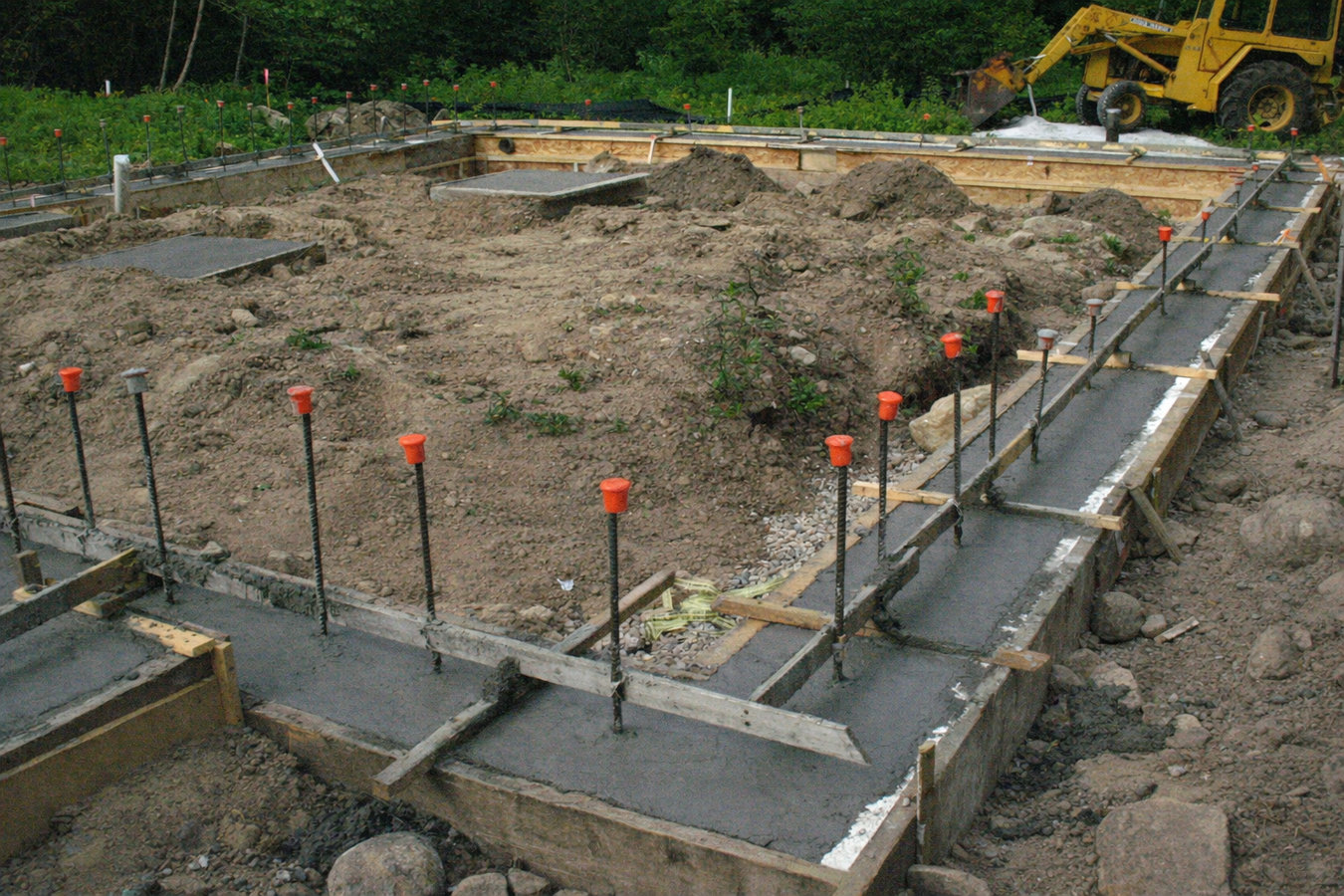
Everything rests on the footing. Decks, additions, fences, and posts need footings dug below the frost line and poured correctly - or they shift, lean, and fail within a few winters.
Concrete footings in Franklin, MA must be dug to 48 inches - the Massachusetts frost depth - to prevent movement from freeze-thaw cycles, and most residential projects involving decks or additions require a building permit and inspection before the pour.
The most common footing problem we see in Franklin is frost heave - footings that were not dug deep enough get pushed up by frozen soil each winter and settle unevenly in spring. Over a few years this tilts the structure above, damages framing connections, and creates gaps and cracks that let water in. It is a problem that starts with a shortcut at the excavation stage and ends with a much larger repair bill. If you are planning a foundation raising project or need to address an existing structure, footing depth is the first thing we assess.
We install footings for decks, room additions, accessory structures, fences, pergolas, light poles, signage, and retaining walls. Every project starts with a permit application and ends with a passed inspection - that documentation protects you when it comes time to sell your home or file a claim.
A deck post that has moved out of plumb or pulled away from the surface below it is a classic sign of footing failure. In most cases the footing was either too shallow, undersized, or poured without proper reinforcement. Once a post starts moving, the framing connections above start to loosen - and that is when the deck becomes unsafe.
When footings shift, the structure above them shifts too. A door or window that suddenly sticks, gaps, or no longer closes flush is often tracking movement in the foundation or footing below it. In Franklin, this symptom frequently worsens in spring after each winter's freeze-thaw cycle works on shallow footings.
Horizontal or stair-step cracks in a foundation wall that grow wider each season often trace back to footing movement. The footing shifts, the wall above it cracks, and water eventually finds its way in. Addressing the footing is the only permanent fix - patching the crack in the wall without fixing what moved it is a temporary measure.
A deck, addition, or pergola that is visibly separating from the main house - even by a fraction of an inch - has footing movement underneath it. The ledger connection tolerates some movement, but once a gap opens, water and pests can enter, and the structural connection degrades quickly. This needs assessment before the next winter makes it worse.
We install concrete footings for residential and light commercial applications throughout Franklin and the surrounding towns. Individual post footings for decks and pergolas, continuous footings for room additions and accessory structures, and spread footings for retaining walls are all within our scope. When a project also involves foundation raising, we assess existing footing conditions as part of that work and replace or reinforce them as needed.
Larger structural projects that need more than footings - such as a full foundation system - connect naturally to our foundation installation service, where footings are the first phase of a complete foundation build. We coordinate both phases under a single project plan and one permit application when the scope warrants it. For authoritative guidance on residential structural requirements, the National Association of Home Builders publishes resources on frost-protected and conventional footing systems.
Individual concrete tube or spread footings for deck posts, pergola columns, and freestanding structures - dug to the 48-inch Massachusetts frost depth.
Poured-in-place continuous footings sized and reinforced for room additions, attached garages, and accessory dwelling units.
Spread footings designed to resist the lateral soil pressure that concrete retaining walls experience - critical for walls over 12 inches of retained height.
Footings for light poles, signage, equipment pads, and commercial structures - designed to load specs and built to permit requirements.
Franklin's ground freezes hard and consistently every winter. The Massachusetts code-required frost depth of 48 inches is not arbitrary - it reflects how deep the frost line actually reaches in a typical New England winter in this region. Franklin also sits on glacially deposited soils that include significant clay content in many neighborhoods. Clay holds moisture and expands more dramatically when it freezes than sandy or loamy soils, which means footings installed in clay-heavy areas face more movement pressure during each freeze-thaw cycle. A footing that might survive at 36 inches in a drier climate will not hold in Franklin's conditions.
We install footings throughout the region, including in Wrentham and Millis, where soil conditions and frost behavior are similar to Franklin. Our crews know what the local building inspectors look for and how to get a footing project through permit and inspection without delays or call-backs.
We respond within one business day. Tell us what the footings are for - a deck, an addition, a fence - and we can start scoping the permit requirements and sizing before we visit. Most footing quotes require a site visit to assess soil conditions and access.
You receive a written estimate covering excavation, forming, concrete, reinforcement, and permit fees. We file the permit application with the Franklin Building Department and schedule the pre-pour inspection so nothing delays the project.
We dig to the required 48-inch frost depth, set the forms or tube forms to the correct diameter, and place any required steel reinforcement. This is the inspection point - the building inspector verifies depth and reinforcement before the pour proceeds.
Concrete is poured and allowed to cure for a minimum of 24 hours before any load is applied. We coordinate the final inspection if required, then walk you through the completed work. You get documentation of the permit and inspection for your records.
We handle the permit, the inspection, and the pour - you get documentation at the end and a footing that holds for the life of the structure.
(508) 803-6598Massachusetts requires footings at 48 inches. We dig to that depth on every residential project in Franklin, without exception. The building inspector verifies it, and you have a record. Contractors who skip depth requirements save time in the short term and cost you money when the structure above moves.
We file the permit application, schedule the pre-pour inspection, and get the documentation to you when the project is done. Unpermitted footing work creates problems at resale and during insurance claims - permitted work protects your investment.
We have been pouring concrete in Franklin since 2016 and know which neighborhoods have heavier clay content and where drainage issues affect excavation. That local knowledge means we design and price footing jobs accurately, without surprises at the dig.
Not all footings are the same - a deck footing and a room addition footing carry very different loads. We size the footing and the reinforcement to what is actually being supported, not to a generic template. The American Concrete Institute provides the standards we work to. American Concrete Institute publishes the design standards we work to.
A footing is not a glamorous part of a project, but it is the one that determines whether everything above it stays level for the next 30 years. We treat it that way on every job, regardless of size.
Lifting and stabilizing existing structures where footing movement has caused settlement or separation.
Learn MoreFull foundation systems where footings are the first phase of a complete structural concrete build.
Learn MoreDeck season and addition season fill up fast - reach out now to get your permit filed and your project on the schedule before the best building weather is gone.