
Loading...
Serving Franklin, MA and surrounding areas. (508) 803-6598
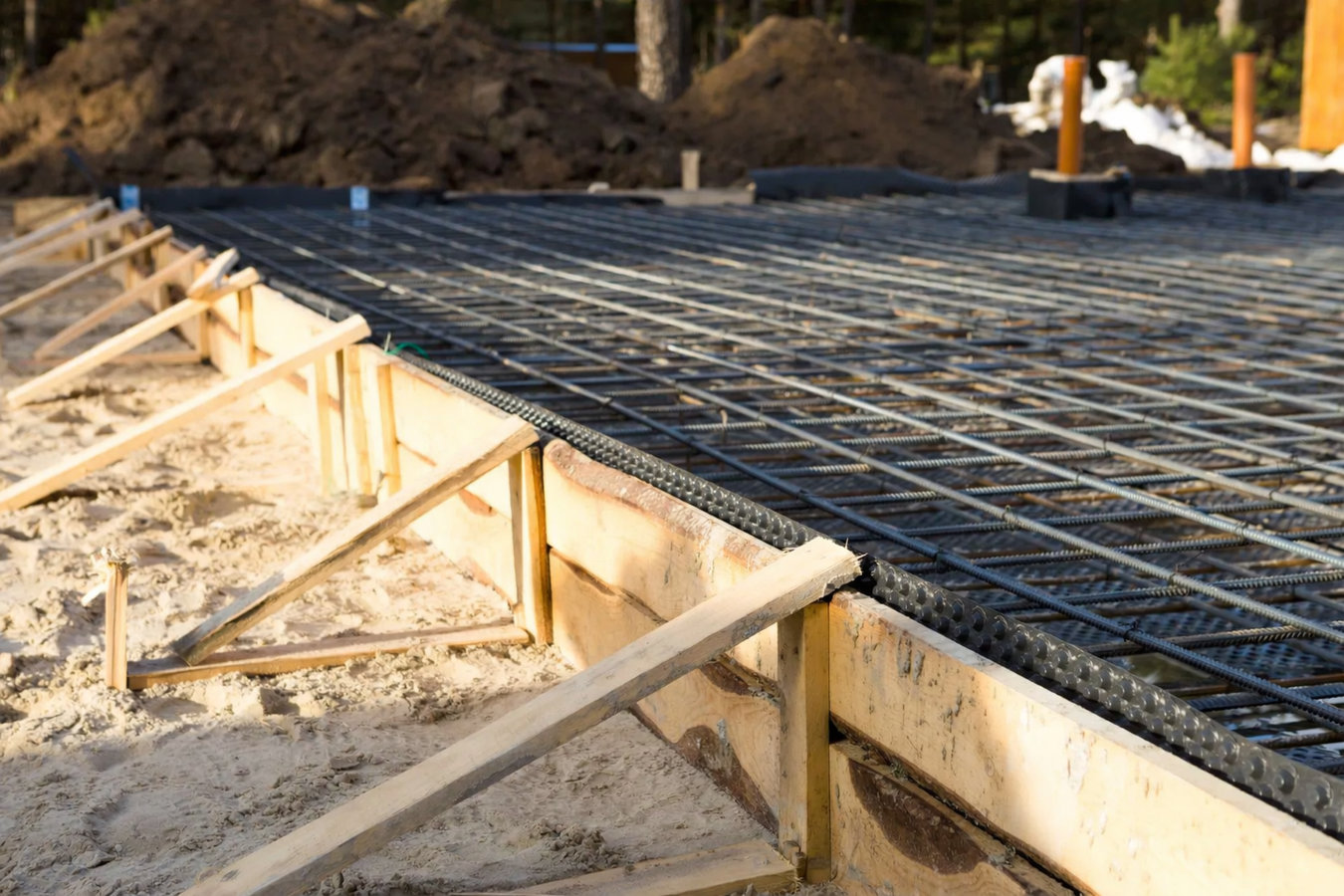
Building on a slab that was not designed for Franklin's freeze-thaw cycles is a problem waiting to happen. We build reinforced concrete slab foundations with the right base, drainage, and thickness for local soil conditions - and we handle every permit.
Slab foundation building in Franklin, MA means grading and compacting the site, laying a gravel base and moisture barrier, placing steel reinforcement, and pouring the concrete in a single session - most residential slabs take one to two weeks from permit approval to a cured, load-bearing surface.
Homeowners in Franklin most often need a new slab when adding a detached garage, a sunroom, or a ground-level addition to a home built between the 1970s and 1990s. Those decades account for a large share of Franklin's housing stock, and expanding those homes is one of the most common projects in the area. The challenge is not just pouring concrete - it is designing a slab that handles what is actually under your feet, because Franklin's glacial till soil varies from lot to lot in ways that are not obvious until a shovel hits it.
A slab project often connects naturally to other concrete work. If you are also getting foundation installation for a larger structure, or if your project requires concrete footings along the perimeter, we can scope and sequence the work together to save on mobilization and keep everything moving on schedule.
If you are planning to add a room, sunroom, detached garage, or accessory structure to your Franklin home, you almost certainly need a new slab foundation underneath it. This is the clearest trigger. A contractor can confirm the right foundation type for your specific project during an initial site visit - some additions are better suited to a full foundation, others to a slab.
Small hairline cracks in an existing slab are common and often harmless. But cracks wider than a quarter-inch, diagonal cracks running from corners, or cracks that keep lengthening after each winter are signs that something is moving underneath. Franklin's freeze-thaw cycle puts real stress on concrete that was not built with adequate drainage or reinforcement, and that stress shows up over time.
If a door that used to swing freely now sticks, or if you can feel a slope in a floor that used to feel flat, the slab underneath may have shifted. Franklin's glacial till soil can settle unevenly - especially in clay-heavy areas that expand when wet and shrink when dry. This movement is gradual, so homeowners often do not notice it until it becomes obvious.
Franklin gets roughly 48 inches of rain per year, and poor drainage around a slab foundation is one of the fastest ways to shorten its life. If you see water sitting against your foundation edge after a storm, or damp spots on a slab floor inside a garage, that moisture is working against the concrete every time it happens. Addressing drainage is often part of a slab repair or replacement project.
We build slab foundations for detached garages, attached garages, home additions, accessory dwelling units, and new construction on vacant lots throughout Franklin and the surrounding towns. Every project starts with a site-specific soil assessment - we do not apply a one-size approach because Franklin's glacial till varies too much from street to street. We then design the base, gravel depth, moisture barrier, reinforcement, and concrete thickness to match what is actually on your site. For projects that also require foundation installation with full walls - such as a walkout basement addition - we can handle both scopes and coordinate the sequence so each phase is inspected and approved before the next one starts.
When a project calls for structural support at the slab perimeter, we integrate concrete footings into the same scope so you are not managing two separate contractors for work that needs to happen in the right sequence. We pull every required Franklin building permit, schedule the town inspections, and give you documentation of the completed and inspected work to keep for your records.
The most common request - a reinforced slab for a detached or attached garage, sized and thickened to carry vehicle loads and local frost conditions.
For homeowners expanding their living space at ground level, matched to the elevation and drainage of the existing structure.
For vacant lots or cleared sites in Franklin where the entire building rests on a slab-on-grade rather than a full basement.
For existing slabs that have settled, cracked, or failed - full removal, base correction, and fresh pour to current standards.
Franklin's ground freezes to roughly 48 inches in a hard winter. That is nearly four feet of soil expanding and contracting every year, and a slab that was not designed with this in mind will show it. We see the results regularly - slabs from the 1970s and 1980s that were poured without proper base prep, without adequate drainage, or without a moisture barrier underneath. The freeze-thaw cycle finds every weakness. When we design a slab for a Franklin property today, frost depth and drainage are factored in from the start, not added as an afterthought.
We work throughout Franklin and the surrounding communities. Homeowners in Hopkinton and Milford deal with the same glacial soil conditions and frost requirements as Franklin, and our site assessments account for the specific soil profile on each lot we work on. If you are near wetland or conservation land - which Franklin has in meaningful amounts - we flag those permitting requirements early so they do not delay your project. The Franklin Conservation Commission approval process is separate from a building permit and has its own timeline - we make sure you know about it before a shovel goes in the ground.
We visit your property, walk the area where the slab will go, and assess the soil and drainage before giving you a written estimate. No firm price comes without seeing the site - the actual ground conditions affect the job too much for an honest quote to come from a phone call.
Once you approve the estimate, we apply for the Franklin building permit in our name. Depending on the department's current workload, this typically takes one to three weeks. We track it and let you know as soon as the permit is approved so work can begin.
The crew grades and compacts the site, lays the gravel base and moisture barrier, sets the forms, and places the steel reinforcement before the concrete truck arrives. The pour itself usually takes a few hours. The crew finishes the surface and, if your project calls for it, installs control joints to guide any future cracking.
The town inspector verifies the work before any framing begins. The slab needs at least one week before it carries structural loads - we do not rush this. Once it has cured and passed inspection, we remove the forms, clean up the site, and walk you through the finished foundation.
We visit your Franklin property, assess the soil, and give you a written quote - no pressure, no obligation. Replies within 1 business day.
(508) 803-6598Franklin's glacial till soil varies from lot to lot - clay-heavy in some spots, gravel-draining in others. We assess your specific ground conditions before designing your slab, not after. That means the base depth, drainage layer, and reinforcement are matched to what is actually underfoot, not to what we assume is typical for the area.
We pull the permit in our name, coordinate the required inspections with the Town of Franklin Building Department, and hand you the completed inspection records when the job is done. That documentation protects your investment when you sell the home or file an insurance claim. A slab built without a permit is a liability that follows the property.
The ground in Franklin freezes hard every winter. We use concrete mixes, gravel base depths, and moisture barriers matched to the frost conditions here - not to what might be adequate in a warmer climate. The American Concrete Institute's guidance on residential concrete in freeze-thaw climates informs how we spec every slab. See the ACI residential standards at concrete.org for reference.
Franklin's practical slab season runs from late April through October. Spring slots fill fast - often four to eight weeks out during peak season. When you book with us, that slot is protected. We do not shuffle clients to fit in last-minute jobs, and we communicate early if anything affects your timeline.
Every one of these points comes back to the same thing - a slab built right the first time costs you less over the life of the structure than one that needs repair or replacement after a few New England winters. We build it right because that is the only approach worth putting our name on.
Full foundation installation with excavation, footing and wall pours, waterproofing, and inspection handling for new homes and major additions.
Learn MorePerimeter and interior footings poured to Massachusetts frost-depth requirements, forming the base that anchors slabs, walls, and additions.
Learn MoreFranklin's concrete season is short and spring slots go fast - reach out now to lock in your estimate and protect your project timeline.